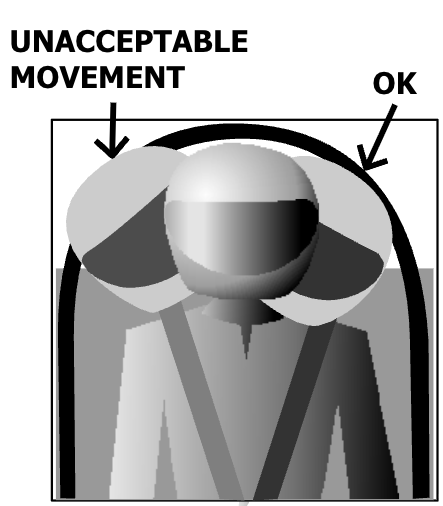
Driver protection: The roll bar must protect the driver’s head and helmet in the event of a rollover. It must be sufficiently tall and wide to provide protection throughout the full range of the driver’s possible movement while properly secured in the driving position.
Triangulation and bracing: The roll bar structure must be triangulated and supported by at least three structural legs or an equivalent structural panel. Bracing may extend either forward or rearward.
For a three-leg structure, the brace must extend from the top of the roll bar and securely attach to the vehicle structure.
For a four-leg structure, each brace must extend to within 4 inches of the top of the roll bar.
A roll bar constructed from more than one continuous piece must be reinforced and triangulated at every junction or joint, in addition to the required bracing at the top.
Structural strength: The roll bar structure must be sufficiently strong to withstand the vehicle being placed upside down with the driver secured inside and dropped from a height of 1 foot without structural failure.
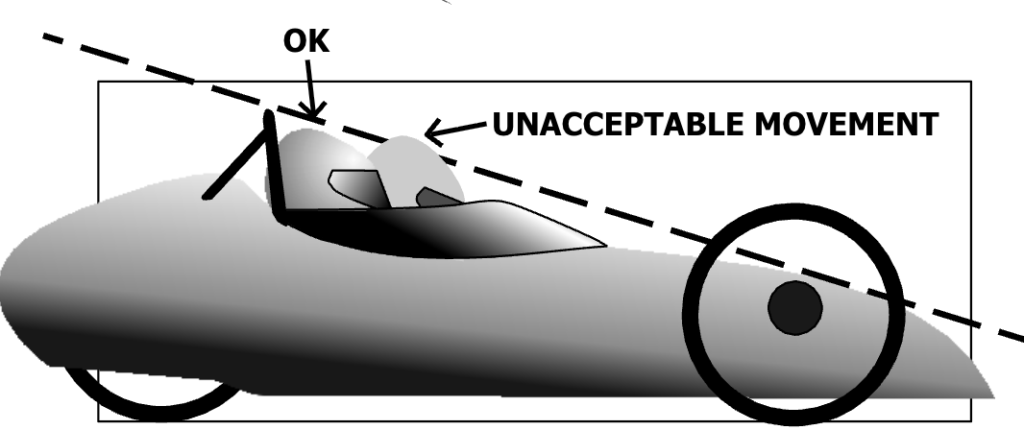
Helmet clearance: With the driver securely belted in the normal driving position, the top of the driver’s helmet must remain below a straight line drawn from the top of the roll bar to the highest structural point of the vehicle. See the applicable drawing.
Integral rollover protection: Composite or monocoque vehicles with integral rollover protection must provide equivalent structural strength and driver clearance to the requirements specified above. The design must be approved by the vehicle inspector and/or race officials.