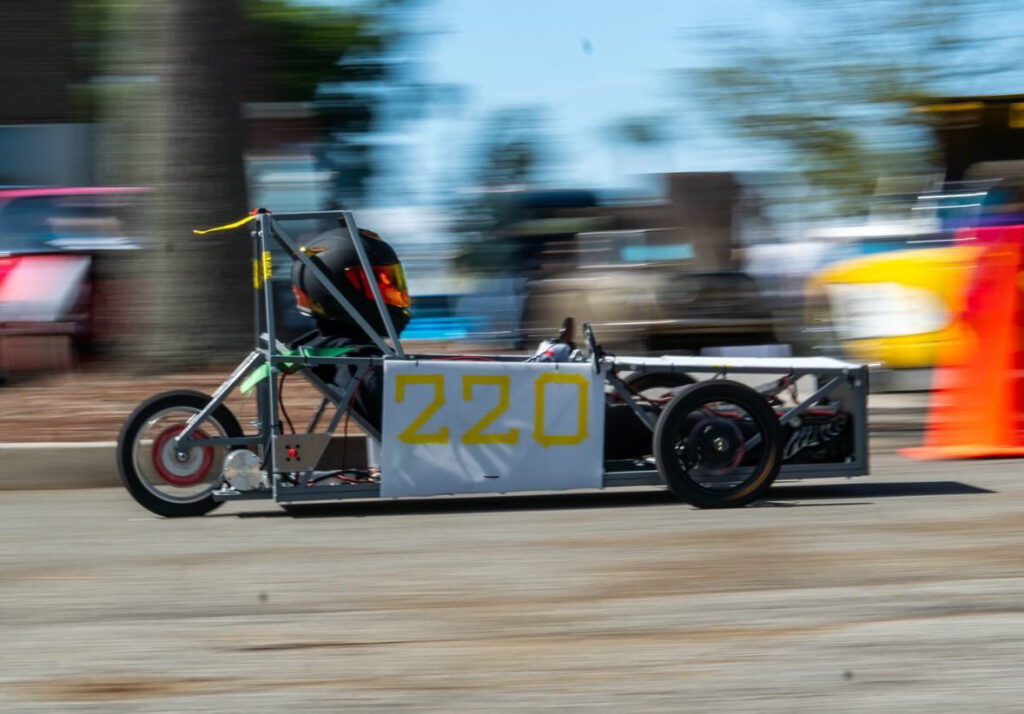
Electrathon America is a national student electric vehicle program built around a simple challenge: maximize efficiency. By designing, building, and racing ultra-efficient vehicles, students gain hands-on experience while exploring engineering, skilled trades, and emerging technology careers.
Why Efficiency Matters
Efficiency isn't glamorous on the surface, but it's the engine behind every company that changed the world.
“Use less energy” doesn’t sound thrilling. Look closer. SpaceX lands rockets to reuse every gram of fuel. Tesla rebuilt the car around the electron. Toyota grew an empire on doing more with less. The biggest breakthroughs of our era are efficiency stories, and that’s exactly the problem Electrathon students fall in love with.
Energy & Utilities
The future won’t be built by wasting resources. It will be built by engineers, technicians, and innovators who can accomplish more with less.
Transportation & Mobility
From electric vehicles and renewable energy to aerospace and advanced manufacturing, efficiency drives progress.
Aerospace & Technology
Electrathon gives students the opportunity to tackle that challenge firsthand. Success comes from smart design, careful testing, strategic thinking, and continuous improvement.
What is Electrathon?
One driver. One hour. One battery.
Teams design and build a lightweight, single-seat electric vehicle. On race day, every car runs the same format: one hour on a closed course, powered by a limited battery allowance. The car that completes the most laps wins.
Because energy is capped, winning is about engineering efficiency and race strategy, aerodynamics, weight, rolling resistance, and how the driver manages power, not raw horsepower. It’s the most educational form of motorsport in the country.
The Numbers
Efficiency measured in real-world performance
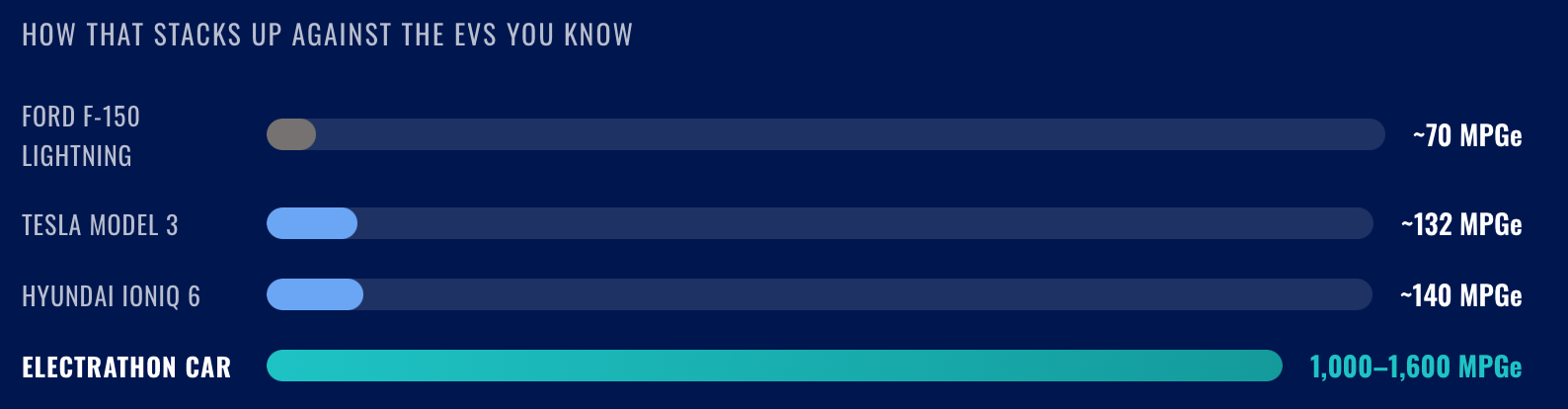
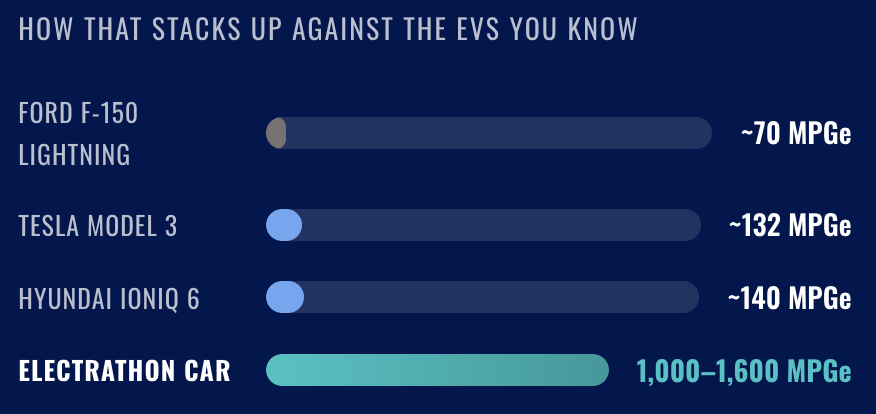
Electrathon cars are evaluated in MPGe (miles per gallon of gasoline equivalent), a standard measure of energy efficiency. Built and optimized by student teams, these vehicles consistently achieve efficiency levels that exceed many production electric vehicles.
1,000+
Fleet average
1,600+
Top-Performing Teams
Put another way, Electrathon vehicles can travel significantly farther on the same amount of energy than most consumer electric vehicles. That combination of performance, constraint, and hands-on design is what defines the program. Students learn engineering concepts in the classroom and then apply them to real-world challenges in energy, transportation, and advanced manufacturing through measurable efficiency outcomes.
The Format
How a race works
1
Tech inspection
Every car is checked for safety and rules compliance, battery limits, braking, roll protection.
2
Green flag
All cars launch together. The clock starts and runs for a full 60 minutes.
3
Manage the energy
Teams balance speed against battery life. Driver swaps and pit strategy matter.
4
Most laps wins
When the hour ends, total distance decides the standings in each class.
Who Competes
Two classes, one paddock
Students never age out of the sport, they graduate into it.
High School Class
For school teams
Students in grades 9–12 build and race under an advisor. The on-ramp to the sport, with rules and support designed for first-time builders.
Advisor-led, classroom friendly
Curriculum & grant resources
Regional events near you
Open Class
For everyone else
Colleges, clubs, alumni and adult builders. Fewer restrictions, more experimentation, the proving ground for advanced engineering.
Keeps alumni in the sport
Advanced & experimental builds
Builds the community pipeline
Heart behind the race
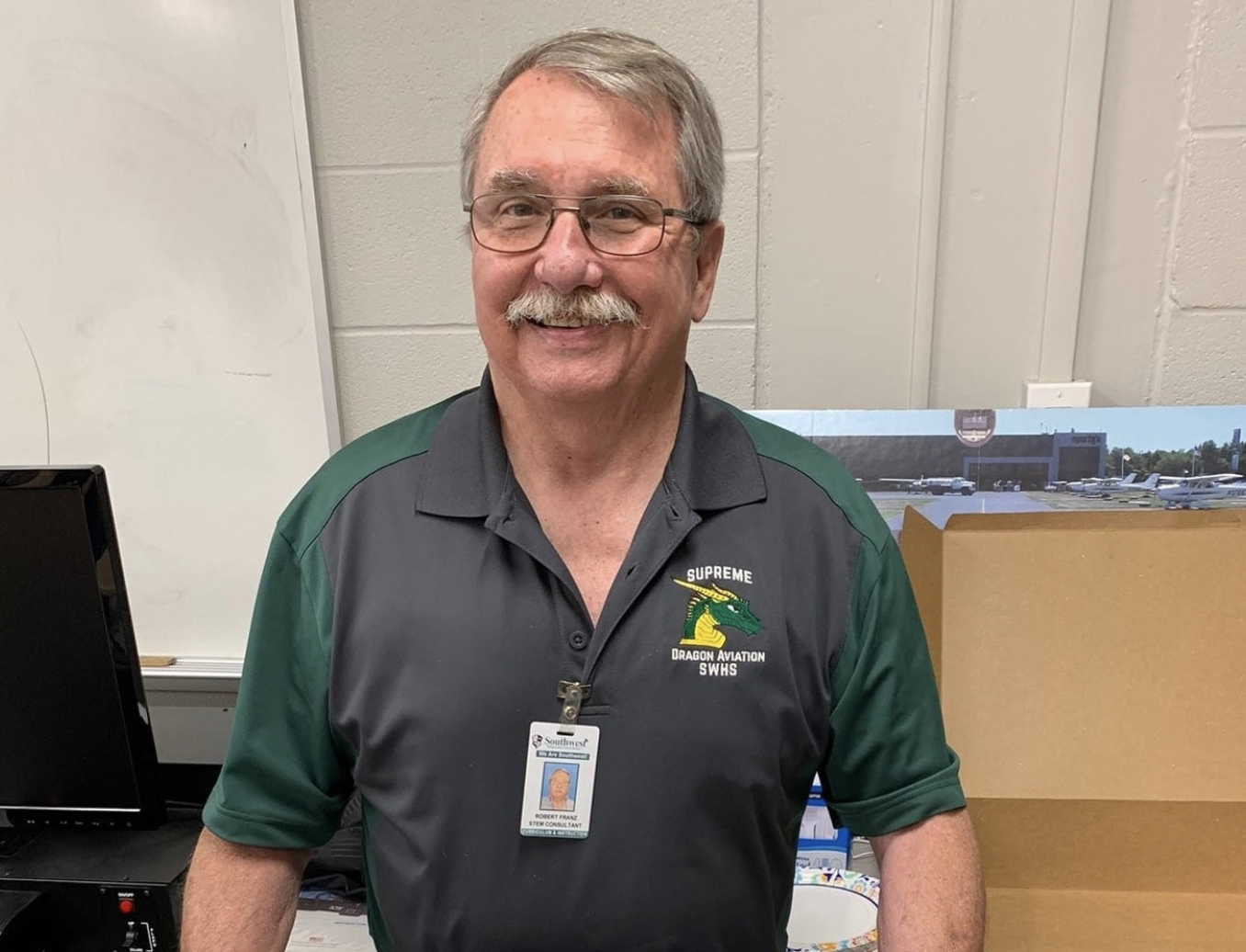
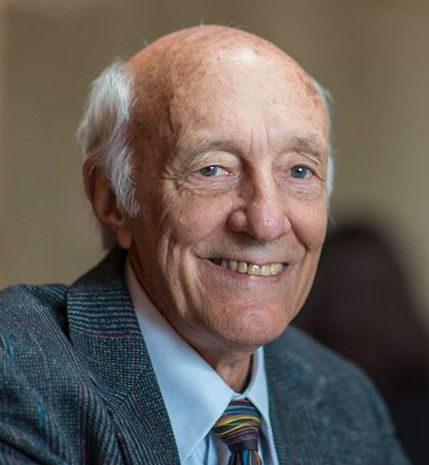
In memory of Bob Franz
A longtime champion of hands-on engineering education and student electric-vehicle racing, Bob Franz dedicated his work to giving young people a real, affordable path into STEM through motorsport.
A passionate educator and early Electrathon pioneer, Bob Franz dedicated his life to empowering students through hands-on engineering and innovation. As founder of Los Altos Academy of Engineering, he inspired young people to build, create, and think beyond traditional boundaries. Though he passed away in 2024, his legacy lives on through the Bob Franz Foundation and generations of future engineers.
The people who steer the organization engineers, educators and industry leaders committed to keeping the sport rigorous, safe and accessible.
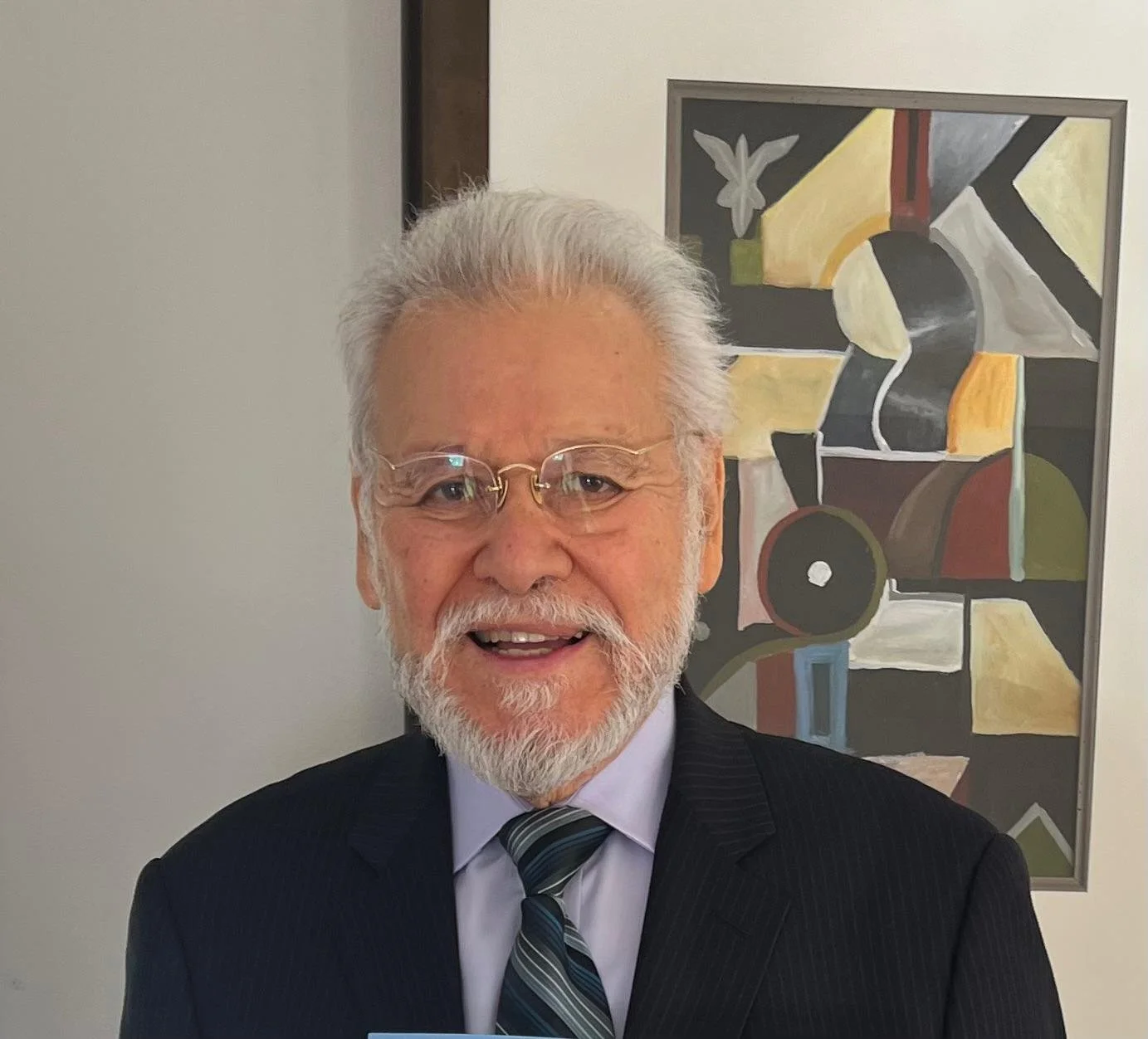
CHarles Vela
Engineering Scientist
Coined the term “STEM” in the late 1980s and spent decades backing it with institutions, federal advisory roles, and NSF recognition.
Ketan Renade
Mechanical Engineer
Helped develop EV battery R&D that inspired the original Tesla Roadster, worked at Toyota to plan next-generation electric vehicles.
Ron Swenson
Managing Director, INIST
A 50-year solar and EV pioneer, Stanford engineer, and serial entrepreneur who founded INIST to build an international curriculum around sustainable transportation.
Jason Gaschel
Florida Power and Light
A former automotive technology professor who secured NSF funding for EV education before joining Florida Power & Light to direct the state’s electric vehicle programs.
Isabella Burckhardt
Florida Power and Light
An FPL program manager who built the Electrathon Speedway Series, placing student-built EVs on tracks at Daytona, Sebring, and Homestead-Miami through partnerships with NASCAR and Formula E.
Our History
35+ years on the grid
1990
First Electrathon events run in the U.S., adapting a format born in the U.K.
2004
Regional structure formalized — sanctioned events spread coast to coast.
2015
High School class booms as STEM funding makes programs accessible.
2026
67+ active teams across 16 states racing a over 140 different cars.
Scroll to Top
This site is registered on wpml.org as a development site. Switch to a production site key to remove this banner.