Electrathon America is a national electric vehicle program built around a simple challenge: maximize efficiency. By designing, building, and racing ultra-efficient vehicles, participants gain hands-on experience in engineering, skilled trades, project management, problem solving, and teamwork.
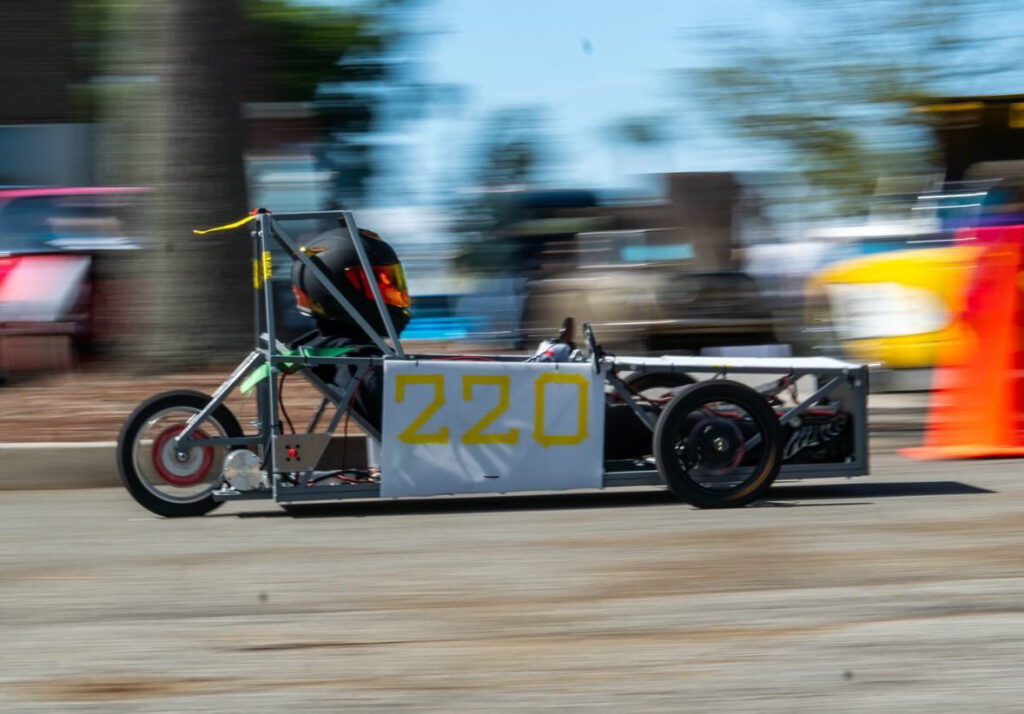
Electrathon vehicles may look simple, but they represent hundreds of design decisions and hours of testing.
Built around a lightweight chassis and powered by a small electric motor, these single-seat vehicles challenge participants to think like engineers, balancing performance, efficiency, reliability, and strategy.
The Numbers
Efficiency measured in real-world performance
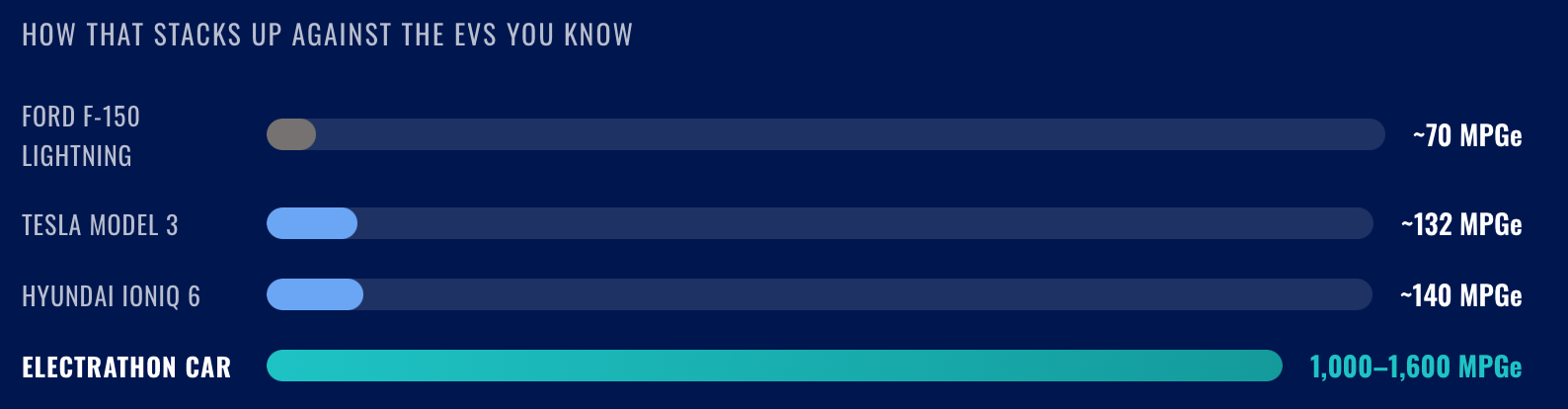
Electrathon cars are evaluated in MPGe (miles per gallon of gasoline equivalent), a standard measure of energy efficiency. Built and optimized by teams, these vehicles consistently achieve efficiency levels that exceed many production electric vehicles.
1,000+
Fleet average
1,600+
Top-Performing Teams
Teams must make every unit of energy count, using engineering, materials, electrical systems, data, and strategy to find the best possible solution.
For students, the track becomes a real-world laboratory where classroom concepts have measurable consequences. The skills developed through that process, from problem-solving and design to testing and optimization, translate directly to the challenges facing today’s energy, transportation, and advanced manufacturing industries.
Who Competes
Two Divisions. Three classes. One energy challenge
The High School and Open Divisions each have three classes. Each class offers a different technical approach, but every team is solving the same fundamental problem: how to use energy as effectively as possible to cover the greatest distance.
Standard Class
The traditional Electrathon approach. Vehicles use lead-acid batteries, putting the focus on efficiency, vehicle design, driving, and energy management.
Advanced Battery Class
Vehicles use modern battery technologies such as lithium-ion and lithium iron phosphate (LiFePO₄). Teams can take advantage of greater energy density while still facing the same efficiency challenge.
Solar Class
Teams can supplement their stored energy with solar power generated from panels mounted on the vehicle.
The Format
How a race works
1
Tech inspection
Every car is checked for safety and rules compliance, battery limits, braking, roll protection.
2
Green flag
All cars within a division and class launch together. The clock starts and runs for a full 60 minutes.
3
Manage the energy
Teams balance speed against battery life. Driver swaps and pit strategy matter.
4
Most laps wins
When the hour ends, total distance decides the standings in each class.